

How to write a good Deal Note
Writing a good deal note is one of the most important things you can do as a syndicate lead. It can make a huge difference in the amount you raise from your syndicate members. There are a number of essential practices that need to be followed when writing a good deal note, this guide is designed to help you understand them.
Key things to take note of
Remember, you're not recommending an investment to anyone. You've made a decision to invest personally, and now you're simply writing up the notes about your thoughts on the company and why you're investing.
It's all about the language you use, see the guide below. You want to strike a balance between showing how great the company is and not over-promising. Good rule-of-thumb, just avoid the word "will".
Use stats & data to back up key points and provide confidence in what you're saying, but make sure you hyperlink [using copy link to highlight ideally] to the sources.
It needs to be written from your perspective (as the syndicate lead) about the company, rather than from the company to investors.
In the deal note page, there's a space for a video from the founder or Syndicate Lead, this can be really powerful, particularly because investors tend to make decisions based on backing the founder.
Aim to avoid adjectives where it is not adding real value & weight to your conviction (however your perspective & tone is desirable), instead allow the facts & data to speak for themselves where possible. Good rule-of-thumb, if you feel the need to include wording like "world first", "hyper-growth", and "epic"; then most likely you might be embellishing without backing - try to avoid this.
Be explicit when stating facts & making claims; for example in the Due Diligence (DD) section, rather than only stating "we reviewed the company documents", instead be sure to also add a list of documents & activities that you undertook - state these clearly (eg. we reviewed their financial model).
Add in company specific risks and syndicate specific conflicts into the risks and disclosure section (we will add in standard early stage startup risks for you once finalising the memo).
...
Templates & Examples
Read these before you start writing your own.
📝 Deal Note Template
Here's a Google Doc you can make a copy of, with descriptions of what to include in each section.
📋 Deal Note Example A
Read this example, see how it's written from the lead to investors and avoids over-promising.
📋 Deal Note Example B
Read another example, see how the language used avoids any 'statements of fact'.
Language Rules Guide
Check out our complete Investor Communications Training guide, and organise your training session with our team via hello@aussieangels.com
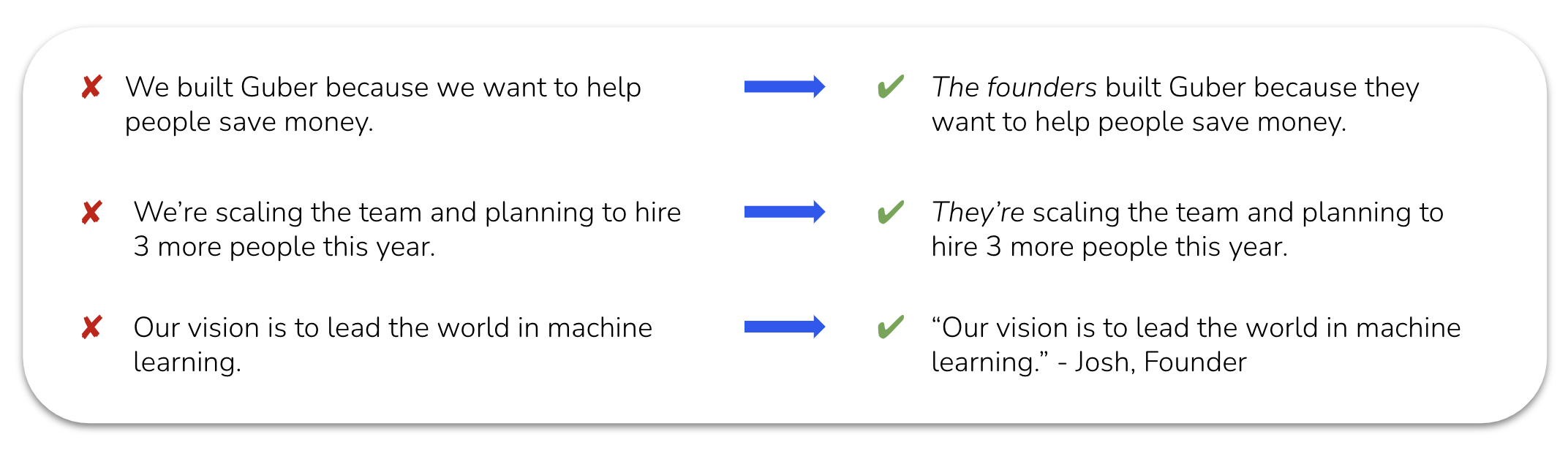
Language Rule #1: Write it from your perspective, not the company's.
You're talking to your syndicate members about why you're investing, so if you copy and paste content from a company's materials, make sure you change the language to reflect your perspective, or use quotation marks to indicate a direct quote.
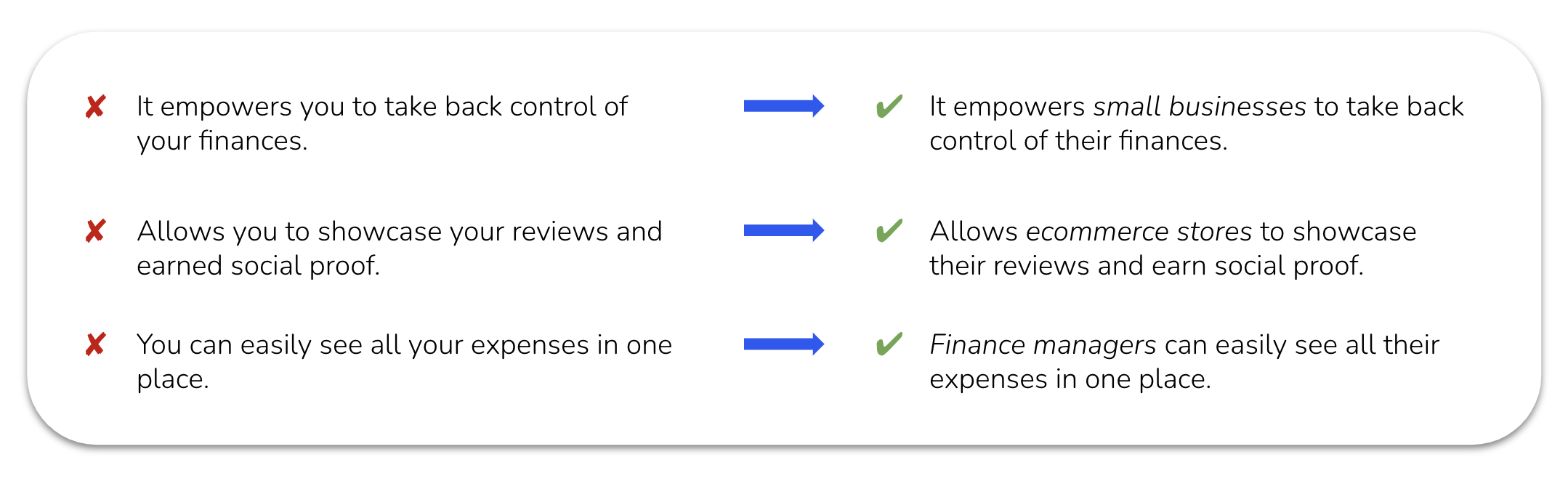
Language Rule #2: Avoid the generic 'you'.
Often when a company uses 'you', they are intending to talk to their customers, however in this case the audience is potential investors not customers. Using the generic 'you' in a deal note is problematic because the audience reading (investors) don't know who the 'you' is. It’s much better to replace 'you' with the specific target customer.
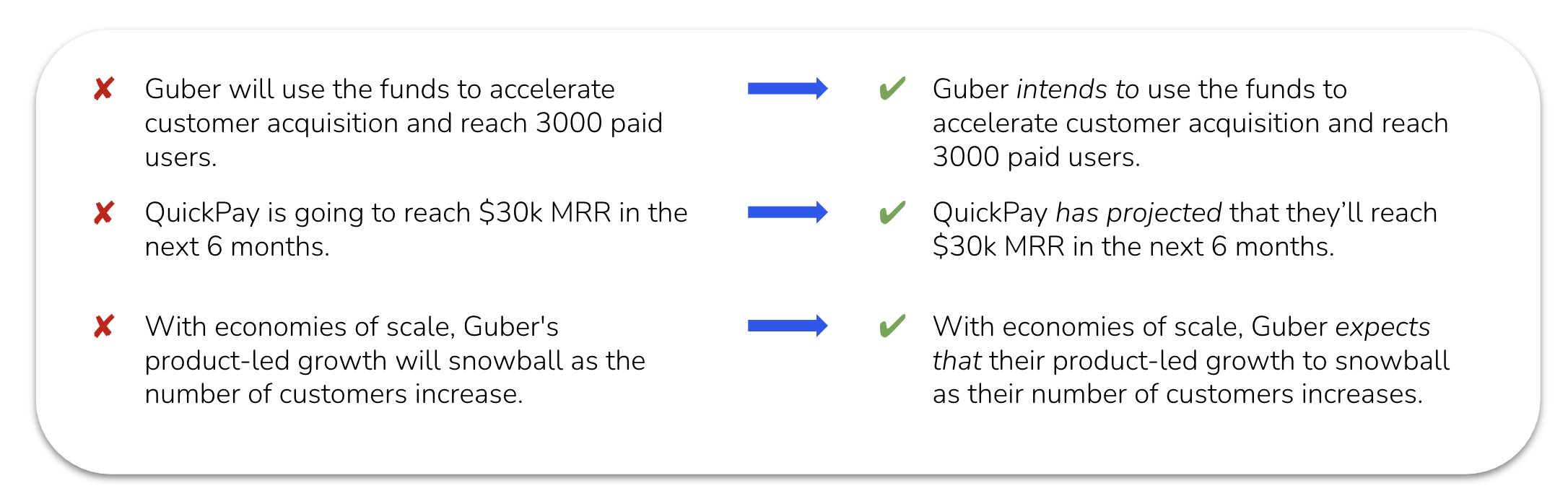
Language Rule #3: Use forward-looking statements.
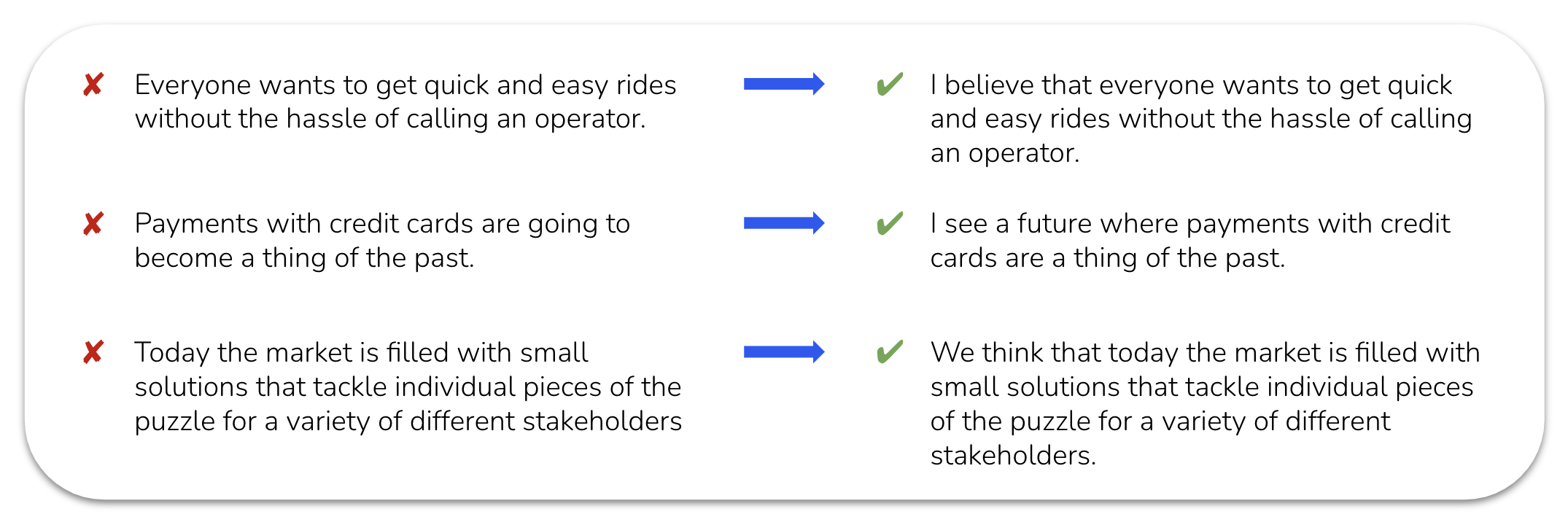
No one knows the future, and it's important not to mislead investors that you do. The best way to avoid this is to simply not use the word "will" or "is". Instead use forward-looking statements often include words such as "anticipates," "estimates," "expects," "projects," "intends," "plans," "believes" and words and terms of similar substance in connection with discussions of future operating or financial performance.
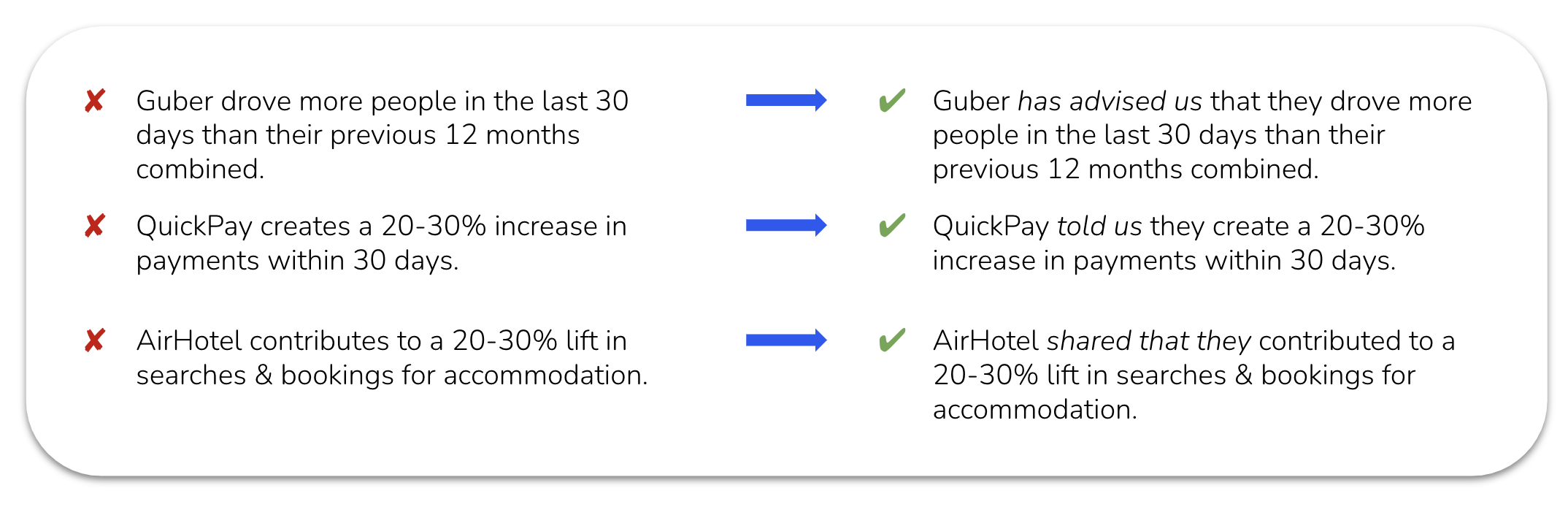
Language Rule #4: Avoid using statements of fact.
Unless you can and have verified that something is 100% accurate, avoid saying things that are portrayed as fact. Instead say what the company has told you, so as not to mislead investors.
Language Rule #5: Make your (and their) opinions clear.
It's important to avoid misleading investors when you talk about the future, particularly when it comes to trends & consumer behaviours. Something that might be obviously true to you (or the company founders) isn't necessarily a fact, it's likely still an opinion.
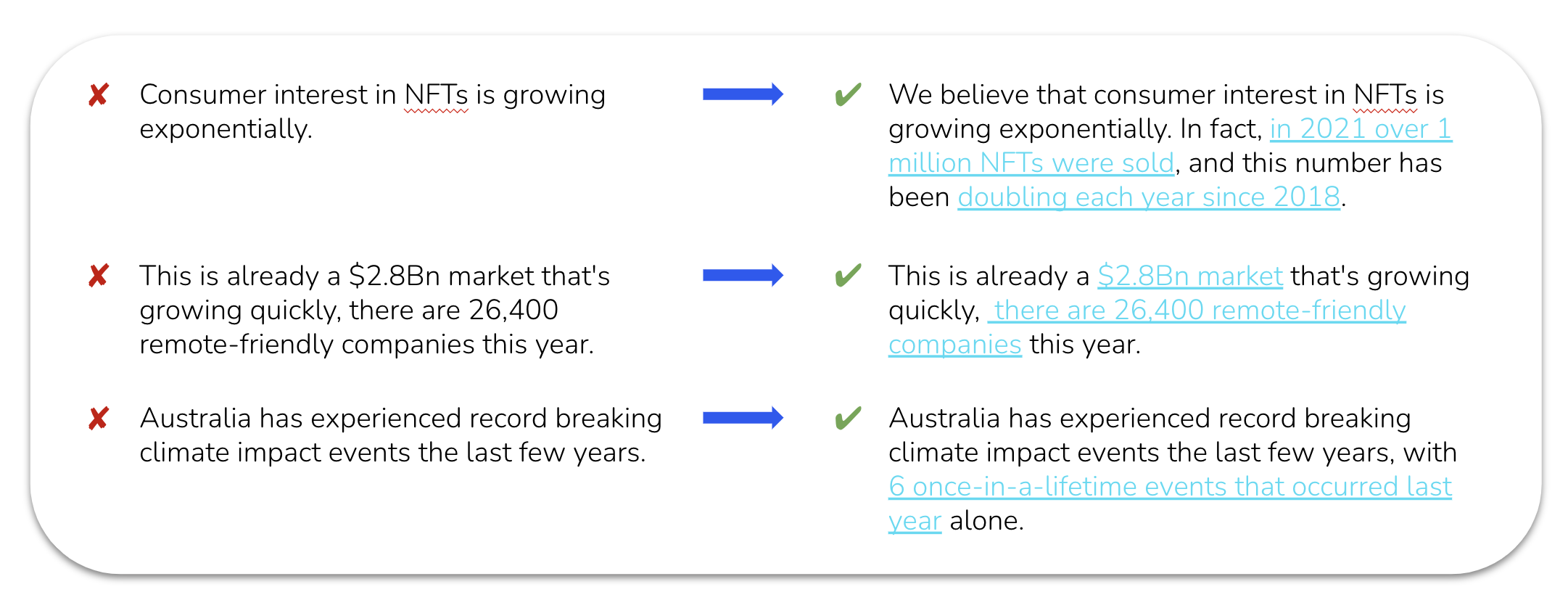
Language Rule #6: Use data to back up your statements & hyperlink your sources.
It's important to avoid misleading investors when it comes to market trends & data. Make sure you use data and stats from external reports to backup your points, particularly around the problem, and market trends. When you quote any stats or data points, make sure you hyperlink your sources.
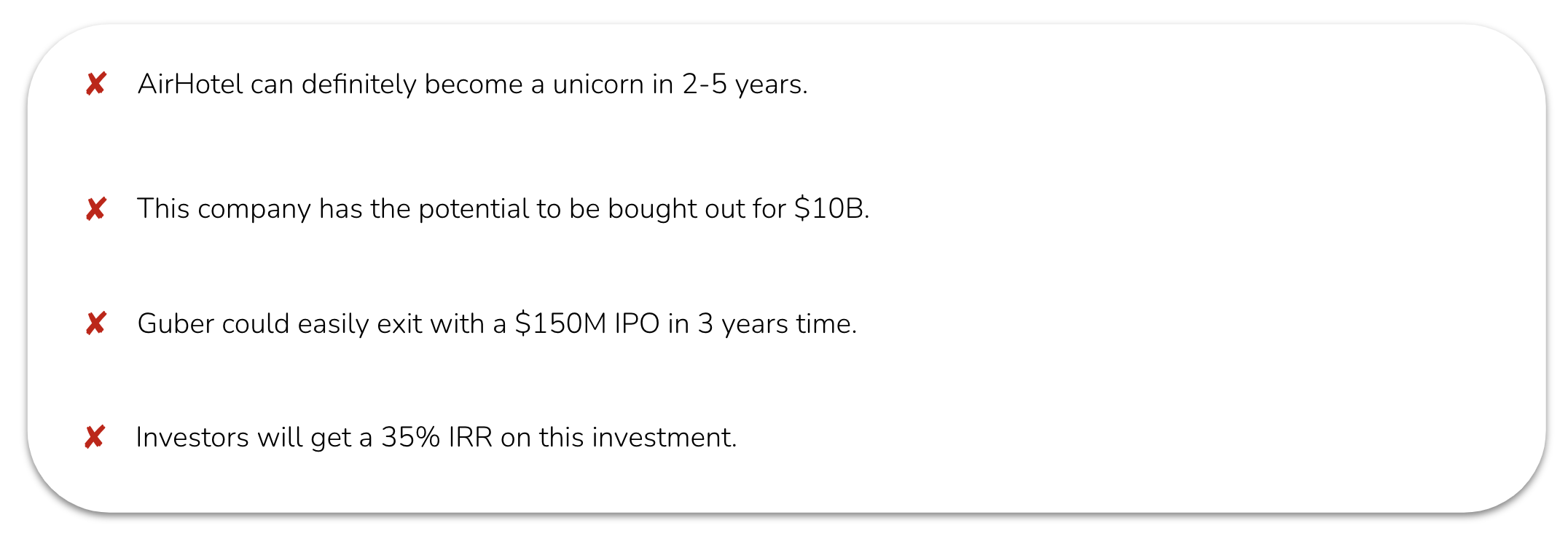
Language Rule #7: No statements that can be seen as making promises.
There's hype and then there's unnecessary hype. The details of the company should sell themselves, so you should not say things that might be seen as making promises or setting expectations for the future.
Language Rule #8: Avoid jargon and acronyms, always provide an explanation if you do.
If you use a term or acronym, you must provide a definition the first time you use it.
This applies to acronyms such as ARR, ESG, OEMs and other startup terms. This also applies to industry terms such as 'green hydrogen', 'bootstrapping', 'digital nomad', and many others.
It does not apply to terms or acronyms that the general population is familiar with, such as US, ANZ, IPO, etc.
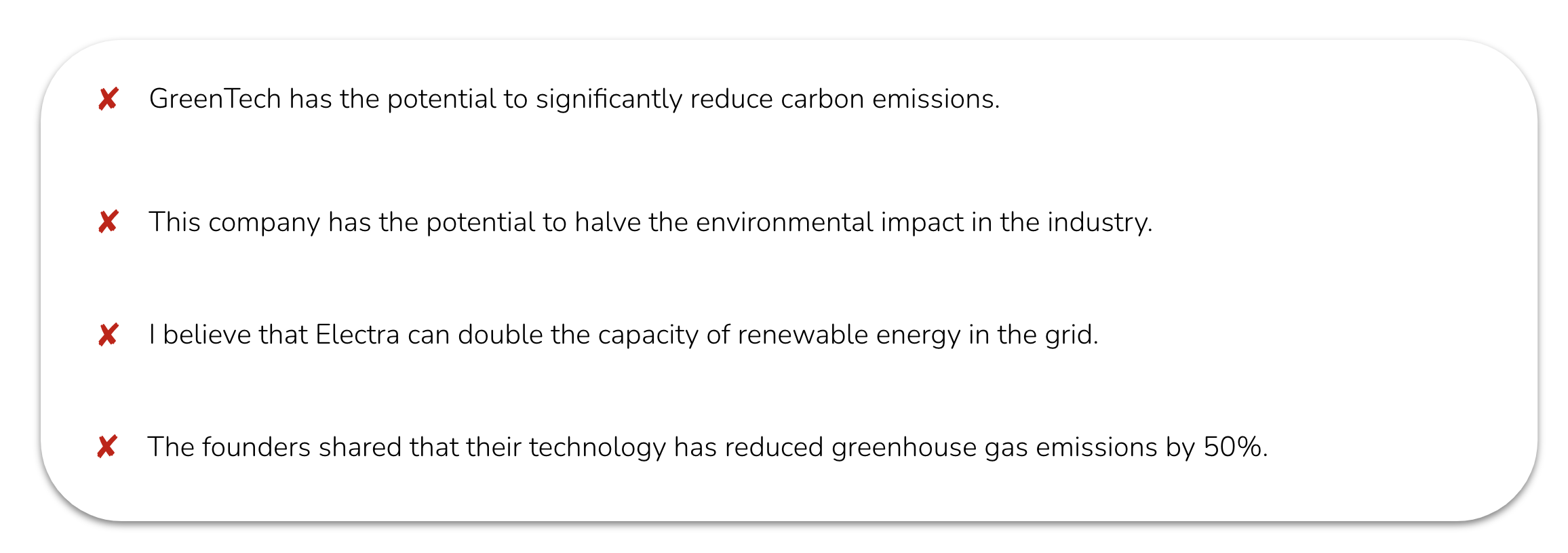
Language Rule #9: Avoid vague environmental impact claims.
ASIC has started cracking down* on 'greenwashing' ESG claims. ASIC considers greenwashing to be ‘the practice of misrepresenting the extent to which a financial product or investment strategy is environmentally friendly, sustainable or ethical.'
Deals offered via Aussie Angels syndicates are considered "financial products" and therefore we must take the ASIC view on 'greenwashing' very seriously.
Greenwashing can involve misleading advertising, unsubstantiated claims, or exaggerations about the environmental benefits of a company, or their products and services.
Greenwashing can often distort relevant information that a current or prospective investor might require in order to make informed investment decisions.
Avoid using broad, unsubstantiated sustainability-related statements or 'jargon' without providing clarifying information and sources, be sure to include validating (preferably third-party verified) data from the founders that aims to back-up any ESG claims.
* eg. ASIC in Feb-2024 fined Bloom (Climate Impact) Fund for investing a portion of their funds in fossil-fuels, as well as a number of other more recent cases mentioned in this Aug-2024 update (Active Super for "not invest", "no way", and "eliminate" ESG filter wording in misleading marketing claims; and Vanguard misleading ESG screening claims including those made in a YouTube interview).
...