


In this webinar, Cheryl Mack & Vadim Petrichenko of Blossom Capital Partners discusses best practices for running a syndicate investment deal, particularly focusing on what to do before the deal goes live.
Part 1 - Before the deal goes live
Here are the key points we covered:
Setting Expectations: Before investing in a company, it's essential to manage expectations with the founders. Investors should understand that syndicate investments typically involve smaller checks from a group of smart investors, and it's about accessing intelligent individuals to join the cap table.
Timelines: It's crucial to have a well-defined timeline for the investment process, covering the period before the deal, the initial stages, and the active phase. Communication with the founder and the syndicate should align with this timeline.
Allocation Agreement: An allocation agreement should be signed with the founder, setting out the maximum amount allocated for the raise. It's important to be conservative when promising amounts to founders and consider potential oversubscriptions.
Founder's Understanding: Founders should understand that there may be situations where the deal might not go ahead due to factors like investor availability. Managing these expectations is crucial.
Efficient Process: The investment process should ideally be completed in three to four weeks to maintain investor interest and avoid distractions. Time can be the biggest obstacle to closing deals.
Communication: Informing the syndicate about the upcoming deal well in advance (about a week beforehand) and using platforms like LinkedIn and Twitter to keep it on their radar can be effective strategies.
Personalisation: Tailoring communication to individual investors, as Brendan Hill mentioned, can enhance engagement and interest.
Founder Q&A Session: Timing the Founder Q&A session a few days after the deal goes live, allowing investors to digest the deal memo first, can improve attendance and engagement.
Flexibility: While it's generally best to send Q&A invites after the deal goes live, flexibility in timing might be needed based on the syndicate's dynamics and deal closing timeline.
Overall, these practices emphasise clear communication, setting realistic expectations, and efficient management of the investment process before a syndicate deal goes live.
Part 2 - When the deal is raising
In part two of the webinar, the focus is on when the deal is live and how to invite LPs (Limited Partners). Vadim Petrichenko from Blossom Capital Partners shares his tips and tricks for inviting LPs. He suggests giving a high-level preview of the deal, explaining why he and Joanna are investing, and keeping the initial communication personal and not overwhelming with due diligence details.
The discussion also touches on how to ensure LPs show up for Founder Q&A sessions. Vadim mentions offering exclusive content like access to investor town halls or recordings, which can serve as a bonus for syndicate members.
Cheryl Mack adds that she likes to send out the recording of the Q&A session right away and emphasizes the importance of making LPs feel special and engaged, as more engagement often leads to higher investments.
The conversation shifts to follow-up emails, with Vadim discussing the balance between communicating too much and not enough. He suggests being clear in email subject lines to indicate the purpose of the communication.
Creating FOMO (Fear of Missing Out) is also discussed, and various methods are mentioned, including limited-time offers, scarcity, social proof, exclusive content, and swag (merchandise).
Cheryl Mack shares how she highlights that others are investing, creating a sense of peer pressure and prompting more LPs to invest. Vadim emphasizes personal outreach, making LPs feel special, and telling stories about LPs who got directly involved with startups after investing through the syndicate.
Overall, the discussion provides insights into effective communication and engagement strategies during the live phase of a deal in a syndicate.
Part 3 - Once the deal is closed to new investment requests
In part three of the webinar, the focus shifts to what happens after the deal is closed for new investment requests. Vadim Petrichenko from Blossom Capital Partners explains that when a deal is "closed," it means that new investment requests are no longer accepted, but the deal itself is not yet complete. This period is referred to as "closing actions," which involve tasks such as getting investors to sign their investment schedules, transfer funds, and ensuring their verification.
Vadim mentions that follow-ups with investors continue during this phase, expressing gratitude for their support and engaging in conversations to gather feedback and maintain an active relationship with investors.
The conversation also highlights the importance of prompt actions by investors in terms of transferring funds and completing necessary certifications. Delays in these processes can potentially extend the timeline of the deal and may lead to investors missing out on the opportunity.
Cheryl Mack emphasises the challenge of balancing the need to get as much funding as possible for the founder while also avoiding delays caused by investors who procrastinate. Both presenters stress the importance of setting clear deadlines, even if they are somewhat arbitrary, to ensure timely completion of closing actions.
Additionally, they share anecdotes about investors who submit investment requests but then face delays due to various reasons, such as being on holiday or needing documents from overseas. These situations highlight the need for investors to be prepared and ready to take action promptly when participating in syndicate investments.
Overall, this part of the webinar provides insights into the post-closure phase of a syndicate deal, where effective communication, deadlines, and prompt actions are crucial to the success of the investment.
Summary
Here are four key takeaways from the webinar:
Managing Expectations and Timelines: Before investing in a company, it is crucial to discuss expectations with the founders and manage timelines. Investors should communicate with the syndicate and ensure everyone understands their role in the investment process. This helps in setting clear expectations for both parties.
Allocation Agreements: Signing allocation agreements with founders is essential to establish the maximum amount they can raise and receive. Founders should be realistic about their expectations, considering potential factors like cash shortages or investor interest. Flexibility in the allocation agreement is important to accommodate potential over-subscriptions.
Efficient Investment Process: Vadim Petrichenko highlights the importance of an efficient investment process. Keeping the fundraising period to a three to four-week window creates a sense of urgency and scarcity. Regular updates, social proof from prominent investors, and exclusive content can help maintain investor interest and engagement.
Effective Communication: Effective communication is vital in the investment world. Personalised outreach, clear subject lines in emails, and a personal touch can make communication more impactful. Investors should be specific about the purpose of their communication, whether it's a deal invite, Q&A session, recording, feedback, or partnership alert.
These takeaways emphasise the importance of clear communication, managing expectations, and efficient processes when investing in startups and building relationships with investors.
...
Watch the full recording:
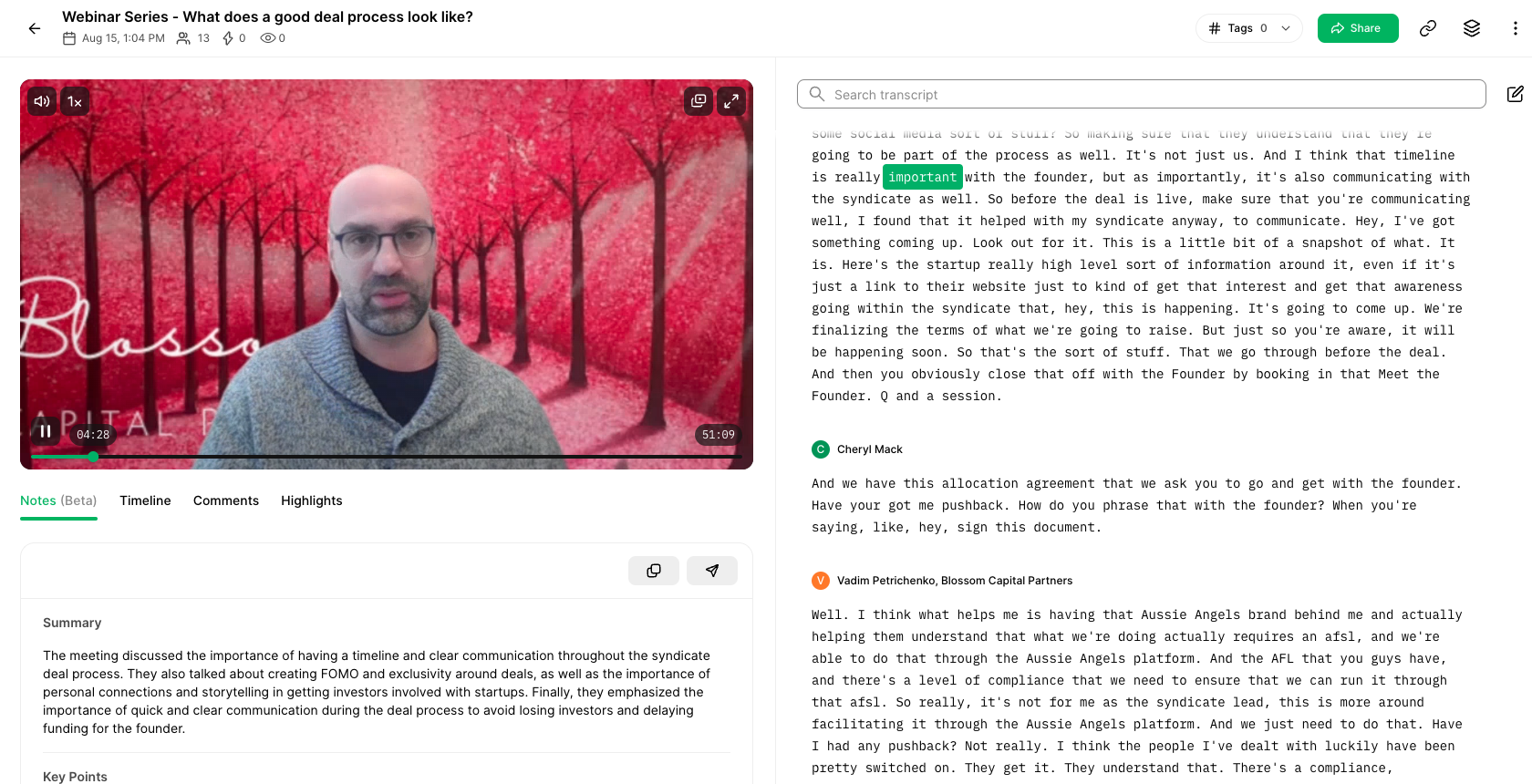
Click image to watch video, or access via this link: https://drive.google.com/file/d/1u7s9Xv3_mXeroAzlRwQCKnvX5QATJ_ua/view?usp=drive_link
...